
Golang使用第三方包viper读取yaml配置信息操作
- 作者: 叶子落丶潇潇
- 来源: 51数据库
- 2021-08-14
golang有很多第三方包,其中的 viper 支持读取多种配置文件信息。本文只是做一个小小demo,用来学习入门用的。
1、安装
go get github.com/spf13/viper
2、编写一个yaml的配置文件,config.yaml
database:
 host: 127.0.0.1
 user: root
 dbname: test
 pwd: 123456
3、编写学习脚本main.go,读取config.yaml配置信息
package main
import (
 "fmt"
 "os"
 "github.com/spf13/viper"
)

func main() {
 //获取项目的执行路径
 path, err := os.getwd()
 if err != nil {
 panic(err)
 }

 config := viper.new()
 config.addconfigpath(path)  //设置读取的文件路径
 config.setconfigname("config") //设置读取的文件名
 config.setconfigtype("yaml") //设置文件的类型
 //尝试进行配置读取
 if err := config.readinconfig(); err != nil {
 panic(err)
 }

 //打印文件读取出来的内容:
 fmt.println(config.get("database.host"))
 fmt.println(config.get("database.user"))
 fmt.println(config.get("database.dbname"))
 fmt.println(config.get("database.pwd"))
}
4、执行go run main.go
输出:
127.0.0.1
root
test
123456
ok!
补充:go基于viper实现配置文件热更新及其源码分析
go第三方库 github.com/spf13/viper 实现了对配置文件的读取并注入到结构中,好用方便。
其中以
viperinstance := viper.new() // viper实例
viperinstance.watchconfig()
viperinstance.onconfigchange(func(e fsnotify.event) {
 log.print("config file updated.")
 viperloadconf(viperinstance) // 加载配置的方法
})
可实现配置的热更新,不用重启项目新配置即可生效(实现热加载的方法也不止这一种,比如以文件的上次修改时间来判断等)。
为什么这么写?这样写为什么就能立即生效?基于这两个问题一起来看看viper是怎样实现热更新的。
上面代码的核心一共两处:watchconfig()方法、onconfigchange()方法。watchconfig()方法用来开启事件监听,确定用户操作文件后该文件是否可正常读取,并将内容注入到viper实例的config字段,先来看看watchconfig()方法:
func (v *viper) watchconfig() {
 go func() {
   // 建立新的监视处理程序,开启一个协程开始等待事件
   // 从i/o完成端口读取,将事件注入到event对象中:watcher.events
 watcher, err := fsnotify.newwatcher()
 if err != nil {
 log.fatal(err)
 }
 defer watcher.close()

 // we have to watch the entire directory to pick up renames/atomic saves in a cross-platform way
 filename, err := v.getconfigfile()
 if err != nil {
 log.println("error:", err)
 return
 }

 configfile := filepath.clean(filename)  //配置文件e:\etc\bizsvc\config.yml
 configdir, _ := filepath.split(configfile) // e:\etc\bizsvc\

 done := make(chan bool)
 go func() {
 for {
 select {
    // 读取的event对象有两个属性,name为e:\etc\bizsvc\config.yml,op为write(对文件的操作)
 case event := <-watcher.events:
 // 清除内部的..和他前面的元素,清除当前路径.,用来判断操作的文件是否是configfile
  if filepath.clean(event.name) == configfile {
    // 如果对该文件进行了创建操作或写操作
  if event.op&fsnotify.write == fsnotify.write || event.op&fsnotify.create == fsnotify.create {
  err := v.readinconfig()
  if err != nil {
  log.println("error:", err)
  }
  v.onconfigchange(event)
  }
  }
 case err := <-watcher.errors:
     // 有错误将打印
  log.println("error:", err)
 }
 }
 }()
 watcher.add(configdir)
 <-done
 }()
}
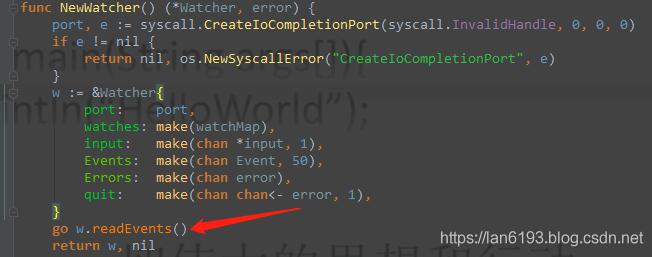
其中,fsnotify是用来监控目录及文件的第三方库; watcher, err := fsnotify.newwatcher() 用来建立新的监视处理程序,它会开启一个协程开始等待读取事件,完成 从i / o完成端口读取任务,将事件注入到event对象中,即watcher.events;
执行v.readinconfig()后配置文件的内容将重新读取到viper实例中,如下图:
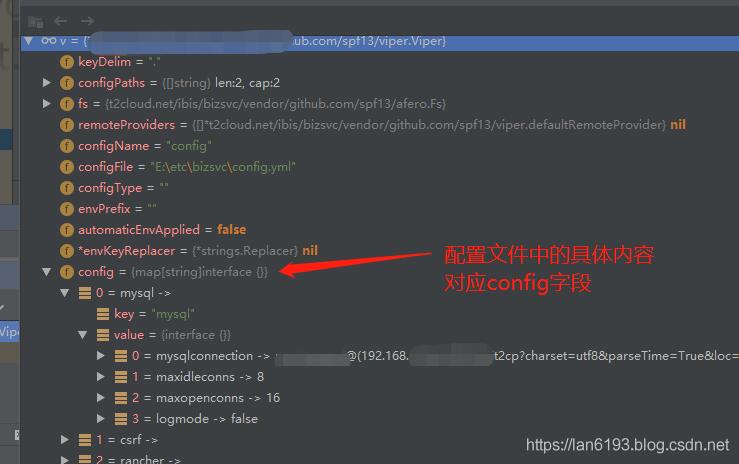
执行完v.readinconfig()后,config字段的内容已经是用户修改的最新内容了;
其中这行v.onconfigchange(event)的onconfigchange是核心结构体viper的一个属性,类型是func:
type viper struct {
 // delimiter that separates a list of keys
 // used to access a nested value in one go
 keydelim string

 // a set of paths to look for the config file in
 configpaths []string

 // the filesystem to read config from.
 fs afero.fs

 // a set of remote providers to search for the configuration
 remoteproviders []*defaultremoteprovider

 // name of file to look for inside the path
 configname string
 configfile string
 configtype string
 envprefix string

 automaticenvapplied bool
 envkeyreplacer  *strings.replacer

 config   map[string]interface{}
 override  map[string]interface{}
 defaults  map[string]interface{}
 kvstore  map[string]interface{}
 pflags   map[string]flagvalue
 env   map[string]string
 aliases  map[string]string
 typebydefvalue bool

 // store read properties on the object so that we can write back in order with comments.
 // this will only be used if the configuration read is a properties file.
 properties *properties.properties

 onconfigchange func(fsnotify.event)
}
它用来传入本次event来执行你写的函数。为什么修改会立即生效?相信第二个疑问已经得到解决了。
接下来看看onconfigchange(func(e fsnotify.event) {...... })的运行情况:
func (v *viper) onconfigchange(run func(in fsnotify.event)) {
 v.onconfigchange = run
}
方法参数为一个函数,类型为func(in fsnotify.event)) {},这就意味着开发者需要把你自己的执行逻辑放到这个func里面,在监听到event时就会执行你写的函数,所以就可以这样写:
 viperinstance.onconfigchange(func(e fsnotify.event) {
 log.print("config file updated.")
 viperloadconf(viperinstance) // viperloadconf函数就是将最新配置注入到自定义结构体对象的逻辑
 })
而onconfigchange方法的参数会赋值给形参run并传到viper实例的onconfigchange属性,以watchconfig()方法中的v.onconfigchange(event)来执行这个函数。
到此,第一个疑问也就解决了。
以上为个人经验,希望能给大家一个参考,也希望大家多多支持。如有错误或未考虑完全的地方,望不吝赐教。